
Industrial operations such as manufacturing, material processing, metalworking, and power generation often produce airborne dust and particulate matter that can harm worker health, reduce equipment performance, and violate environmental standards. An effective Dust Extraction System captures, removes, and safely handles dust from the air, improving workplace air quality, operational efficiency, and regulatory compliance.
In this blog, we explore what dust extraction systems are, how they work, their key components, applications, and why they are a critical part of modern air pollution control solutions.
What Is a Dust Extraction System?
A Dust Extraction System is an engineered solution designed to remove dust, airborne particles, and contaminants generated during industrial processes. These systems extract dust directly at the source, filter the contaminated air, and discharge clean air back into the workspace or environment.
Dust extraction systems play a vital role in protecting worker health, maintaining equipment performance, and ensuring compliance with environmental and occupational safety regulations.
How Dust Extraction Systems Work
A typical dust extraction system operates through the following stages:
1. Dust Capture at Source
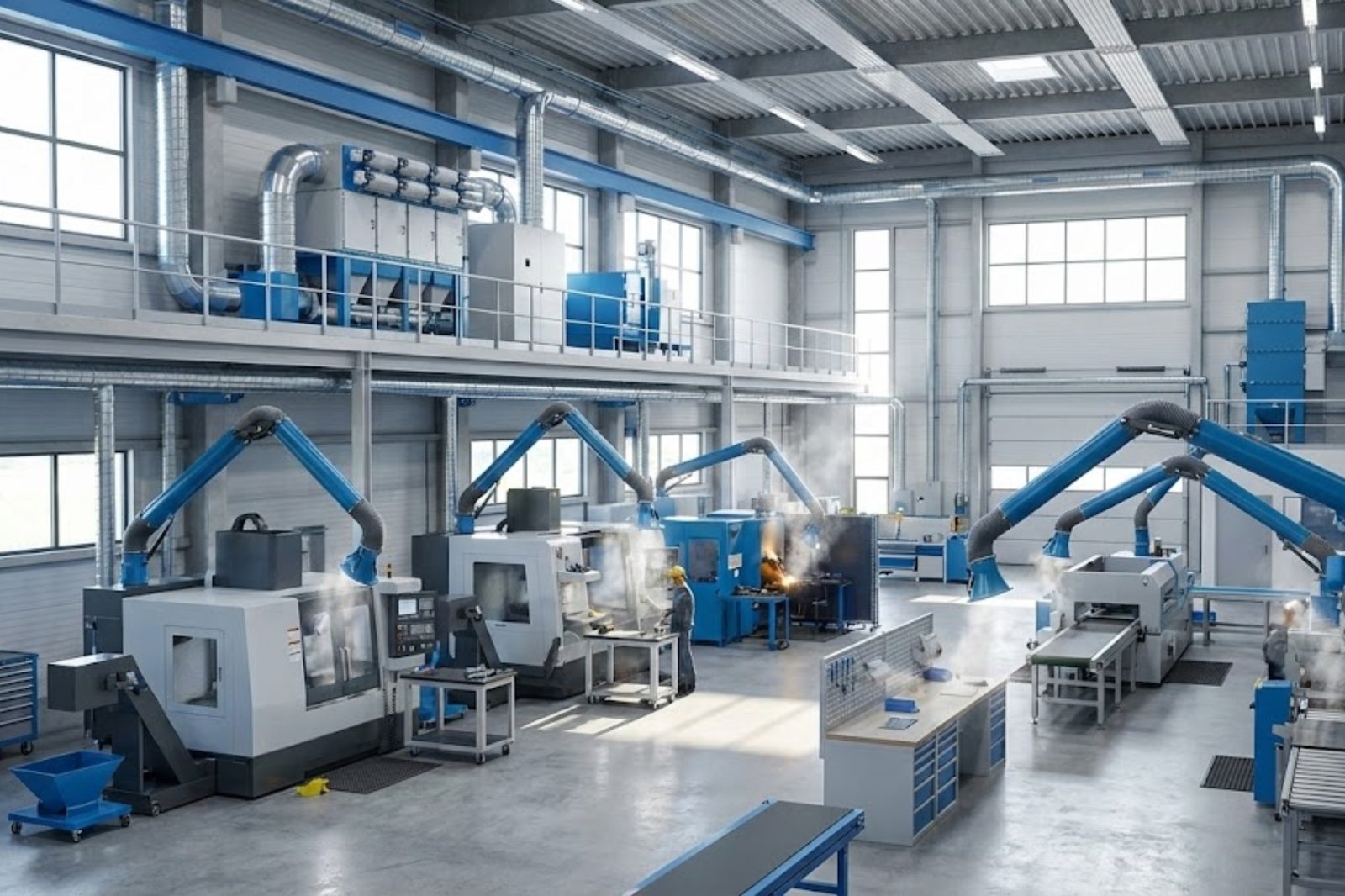
Dust is captured directly at the point of generation using extraction hoods, capture arms, or enclosures. Capturing dust at the source prevents it from spreading throughout the facility.
2. Air Conveyance
The dust-laden air is transported through a network of ducting to the dust collection unit using industrial fans or blowers.
3. Filtration and Separation
Dust particles are separated from the air using filtration technologies such as bag filters, cartridge filters, or cyclonic separators.
4. Clean Air Discharge
Filtered air is safely released back into the workplace or atmosphere in compliance with air quality standards.
5. Dust Collection
Collected dust is stored in hoppers or containers for safe disposal or recycling.
Key Components of a Dust Extraction System
A well-designed dust extraction system typically includes:
- Dust capture hoods or extraction points
- Ducting and airflow distribution network
- Industrial fans or blowers
- Dust collectors and filtration units
- Dust collection hoppers or bins
- Control panels and monitoring systems
Each component is carefully engineered to ensure efficient airflow, effective dust removal, and reliable operation.
Types of Dust Extraction Systems
Baghouse Dust Collectors
High-efficiency systems that use fabric filter bags to capture fine dust particles, suitable for heavy industrial applications.
Cartridge Dust Collectors
Compact filtration systems ideal for fine and lightweight dust where space is limited.
Cyclone Separators
Mechanical systems that remove heavier dust particles using centrifugal force before secondary filtration.
Wet Dust Collection Systems
Use water or liquid media to capture dust, ideal for explosive, sticky, or high-temperature dust.
Benefits of Dust Extraction Systems
Installing an effective dust extraction system offers multiple benefits:
- Improved workplace air quality
- Enhanced worker health and safety
- Reduced fire and explosion risks
- Protection of machinery and equipment
- Compliance with environmental regulations
- Lower maintenance and downtime
- Improved operational efficiency
Industries That Use Dust Extraction Systems
Dust extraction systems are widely used across industries, including:
- Manufacturing and fabrication
- Metal processing and foundries
- Cement and construction materials
- Mining and mineral processing
- Power generation plants
- Chemical and petrochemical industries
- Food processing and packaging
- Woodworking and furniture manufacturing
Each industry requires a customized dust extraction solution based on process conditions and dust characteristics.
Choosing the Right Dust Extraction System
Selecting the right dust extraction system depends on several factors, including:
- Type and quantity of dust generated
- Particle size and composition
- Process temperature and humidity
- Explosion or toxicity risks
- Required airflow and filtration efficiency
Working with experienced engineering professionals ensures the system is properly designed, sized, and optimized for long-term performance.
Conclusion
A Dust Extraction System is an essential component of modern industrial air pollution control. By capturing and removing airborne dust at the source, these systems protect workers, enhance equipment lifespan, improve productivity, and ensure regulatory compliance.
Investing in a reliable dust extraction solution supports safer operations, cleaner environments, and sustainable industrial growth.
Call to Action
Looking for reliable dust extraction solutions for your industrial facility?
RISAS offers customized air pollution control systems with expert engineering support to meet your specific requirements.
📞 Phone: +966 13 667 7533
📧 Email: info@risas.sa