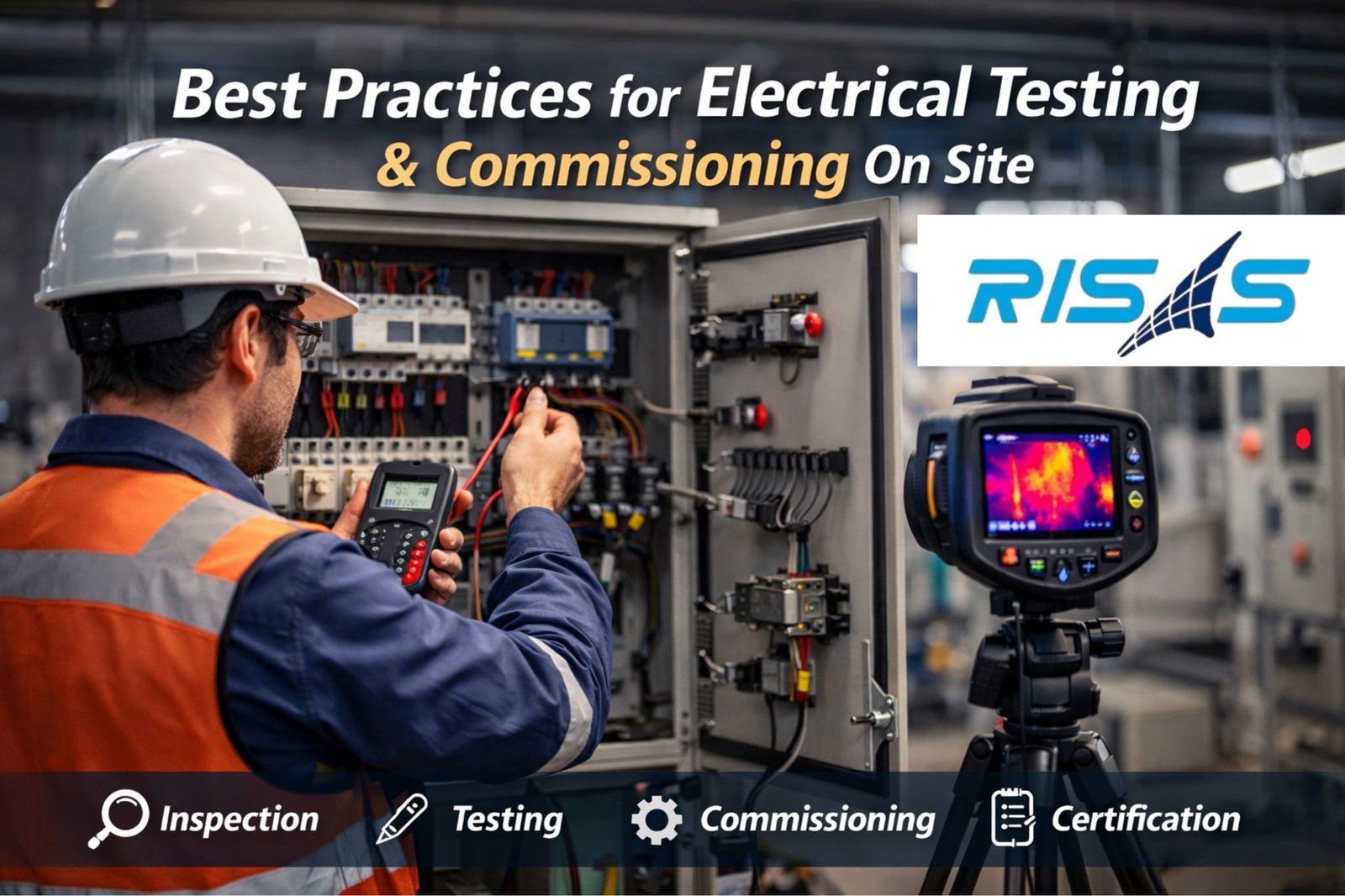
Electrical testing and commissioning are critical phases in any industrial or commercial project. Proper execution ensures that electrical systems are safe, reliable, and fully compliant with operational requirements.
In fast-growing industrial environments—especially in regions like Saudi Arabia (KSA)—following best practices in electrical testing and commissioning is essential for minimizing risks, avoiding downtime, and ensuring long-term system performance.
This guide outlines the best practices for conducting electrical tests and commissioning on site, helping facilities achieve optimal efficiency and safety.
1. Plan and Prepare Thoroughly
Successful electrical testing and commissioning always begin with detailed planning.
Before starting any on-site activity, it is important to:
- Define the scope of testing and commissioning
- Review design drawings and technical specifications
- Identify applicable codes, standards, and safety regulations
- Allocate resources, tools, and qualified personnel
- Establish timelines and testing procedures
Coordination with all stakeholders—including contractors, suppliers, and facility teams—is crucial to ensure readiness.
Prepare essential documentation such as:
- Checklists
- Test report templates
- Commissioning procedures and manuals
A well-structured plan reduces errors, improves efficiency, and ensures smooth project execution.
2. Inspect and Verify Installation
Before energizing any system, a detailed inspection must be carried out to verify that the installation meets design and safety requirements.
Key inspection areas include:
- Equipment condition and alignment
- Cable routing and connections
- Proper labeling and identification
- Grounding and earthing systems
- Protection and isolation devices
It is also important to verify that all components are:
- Correctly installed
- Properly calibrated
- Fully integrated with other systems
Any defects, deviations, or non-conformities should be identified early and corrected immediately to avoid future failures.
3. Perform Electrical Testing and Measurements
Once installation is verified, the next step is to conduct detailed testing to evaluate system performance.
Common electrical tests include:
- Continuity testing
- Insulation resistance testing
- Polarity testing
- Voltage and current measurement
- Power and frequency analysis
- Earth fault loop impedance testing
- Harmonic analysis
- Protection relay testing
- Fault level analysis
Using the correct instruments and following standard testing procedures is essential for accurate and reliable results.
All results should be documented and compared with:
- Design specifications
- Industry standards
- Expected performance criteria
This step ensures that the system is functioning safely and efficiently before commissioning.
4. Execute Commissioning Procedures
Commissioning involves placing electrical systems into operation and validating their performance under real working conditions.
During commissioning, systems should be tested under:
- Normal operating conditions
- Load conditions
- Emergency or fault scenarios
This helps confirm that all components work together as intended.
Key commissioning activities include:
- Functional testing of systems
- Load testing and performance verification
- System integration checks
- Safety system validation
Proper commissioning ensures that the electrical system is ready for continuous operation without risks.
5. Ensure Compliance and Certification
Electrical systems must comply with applicable standards, codes, and regulations before being approved for operation.
This includes:
- Verifying compliance with local and international standards
- Conducting final inspections
- Obtaining approvals from relevant authorities
In Saudi Arabia, compliance with safety and electrical regulations is critical for project approval and operation.
Certification provides assurance that:
- Systems are safe
- Performance meets required standards
- Installation is compliant
6. Document, Report, and Handover
Documentation is a key part of the testing and commissioning process.
All activities should be properly recorded, including:
- Test reports and results
- Inspection checklists
- Commissioning records
- Certificates and approvals
After completion, the system should be handed over to the facility owner or operator along with:
- Operation manuals
- Maintenance guidelines
- Training sessions for staff
Proper handover ensures that systems are operated safely and maintained effectively.
Why These Best Practices Matter
Following best practices in electrical testing and commissioning provides several advantages:
- Improved system reliability and performance
- Enhanced safety for personnel and equipment
- Reduced risk of failures and downtime
- Compliance with regulations and standards
- Long-term operational efficiency
For industrial facilities, especially in demanding environments, these practices are essential for maintaining high performance and safety standards.
Conclusion
Electrical testing and commissioning are not just technical processes—they are critical steps that ensure the success of any facility. By following structured best practices—from planning and inspection to testing, commissioning, and handover—organizations can achieve safe, efficient, and reliable electrical systems.
In regions like Saudi Arabia, where industrial growth is rapid, adopting professional testing and commissioning strategies is key to achieving operational excellence and regulatory compliance.
Call to Action
Looking for expert electrical testing and commissioning services?
RISAS provides reliable and professional solutions tailored to industrial and commercial facilities, ensuring safety, compliance, and performance.
📞 +966 13 667 7533
📧 info@risas.sa