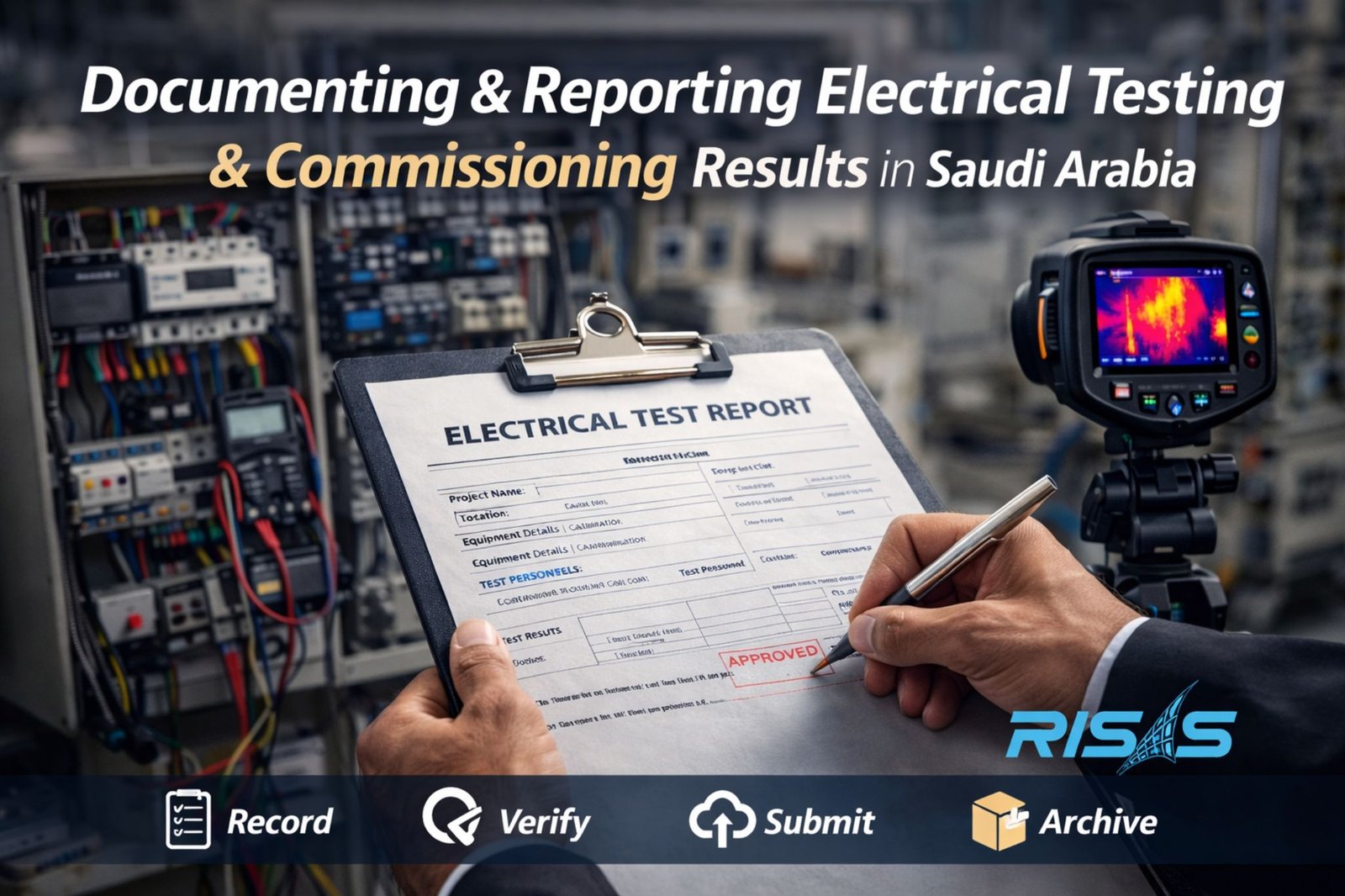
Proper documentation and reporting are critical components of any electrical testing and commissioning project. In industrial and commercial facilities across Saudi Arabia (KSA), accurate reporting ensures compliance with safety standards, supports operational efficiency, and provides a clear record for future maintenance and audits.
A structured approach to documenting electrical test results helps organizations maintain transparency, accountability, and regulatory compliance.
This guide outlines the best practices for documenting and reporting electrical testing and commissioning results effectively.
1. Prepare a Detailed Test Plan
Before starting any testing and commissioning activities, it is essential to prepare a comprehensive test plan.
The test plan should define:
- Scope and objectives of testing
- Applicable standards, codes, and specifications
- Testing methods and procedures
- Roles and responsibilities of personnel
- Equipment and tools required
- Test schedule and timelines
- Risk assessment and safety measures
In Saudi Arabia, aligning the test plan with local regulations and project requirements ensures smooth execution and approval processes.
A well-prepared test plan acts as a roadmap for the entire commissioning process.
2. Conduct Testing and Commissioning Systematically
Once the plan is in place, testing and commissioning should be carried out according to defined procedures.
Typical tests include:
- Visual inspection
- Continuity testing
- Insulation resistance testing
- Polarity testing
- Earth fault loop impedance testing
- Functional and performance testing
All tests must be performed using calibrated instruments and by qualified personnel to ensure accuracy and safety.
Any defects or deviations should be immediately recorded and corrected to avoid operational risks.
3. Record Test Results Accurately
Accurate documentation of test results is essential for verifying system performance and compliance.
A standard test report or certificate should include:
- Project name and location
- Date and time of testing
- Names of test personnel and witnesses
- Equipment details and calibration records
- Test procedures and standards used
- Measurements and observed values
- Pass/fail status
- Observations, comments, and recommendations
- Corrective actions taken
Supporting documents such as photos, diagrams, and videos should also be included to provide complete documentation.
Clear and structured reporting ensures easy understanding and future reference.
4. Review and Verify the Results
After testing is completed, all results must be reviewed and verified by an independent authority.
This could include:
- Consultants
- Inspectors
- Client representatives
The verification process ensures:
- Accuracy of recorded data
- Compliance with specifications and standards
- Identification of any discrepancies or non-conformities
Approval and sign-off by authorized personnel are essential for project validation and acceptance.
5. Submit and Archive the Documentation
Once verified, the test results should be submitted to relevant stakeholders, including:
- Clients
- Contractors
- Consultants
- Regulatory authorities
Documentation should be stored securely using:
- Digital systems (cloud or document management systems)
- Organized filing structures
- Standard naming conventions
Proper archiving ensures that data is:
- Easily accessible
- Traceable
- Auditable for future use
This is especially important for industrial facilities in Saudi Arabia where compliance and record-keeping are critical.
6. Update As-Built Drawings
An often overlooked but important step is updating as-built drawings.
After testing and commissioning, drawings should reflect:
- Actual installation layout
- Circuit configurations
- Equipment locations
- Any modifications or changes
These updated drawings serve as a reference for:
- Maintenance teams
- Future upgrades
- Troubleshooting
Accurate as-built documentation improves long-term operational efficiency.
Why Proper Documentation Matters
Effective documentation and reporting provide several benefits:
- Ensures compliance with safety and regulatory standards
- Provides evidence of system performance
- Supports maintenance and troubleshooting
- Reduces risk of future failures
- Enhances project transparency and accountability
In Saudi Arabia’s industrial sector, proper documentation is essential for project approvals, audits, and operational success.
Conclusion
Documenting and reporting electrical testing and commissioning results is a critical step in ensuring safe and efficient system operation. By following a structured process—from planning and testing to reporting and archiving—organizations can achieve reliable performance and regulatory compliance.
For industries in Saudi Arabia, adopting professional documentation practices ensures long-term operational efficiency and safety.
Call to Action
Looking for expert electrical testing and commissioning services in Saudi Arabia?
RISAS provides reliable solutions with complete documentation, compliance, and professional reporting for industrial and commercial facilities.
📞 +966 13 667 7533
📧 info@risas.sa