Industrial environments generate large amounts of dust, debris, liquids, metal chips, and hazardous materials during daily operations. Without an efficient cleaning solution, these materials can accumulate quickly, leading to safety hazards, equipment damage, and reduced productivity.
Selecting the right industrial vacuum system for your facility is essential for maintaining workplace cleanliness, protecting employees, and ensuring smooth industrial operations. Modern industrial vacuum systems are designed to handle demanding cleaning tasks while improving efficiency and compliance with safety standards.
In this guide, we explain how to choose the best industrial vacuum system for your facility based on operational requirements, materials handled, and working conditions.
What Is an Industrial Vacuum System?
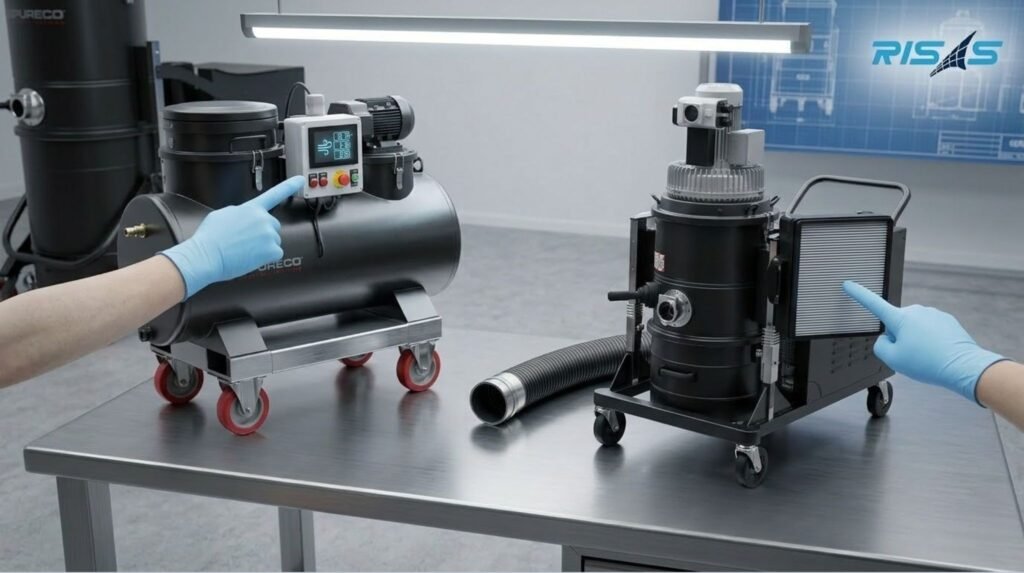
An industrial vacuum system is a high-performance cleaning device designed to collect dust, liquids, solids, and hazardous materials from industrial environments. These systems are built with powerful suction units, advanced filtration technology, and large collection containers to handle heavy-duty cleaning tasks.
Industrial vacuum systems are widely used in:
- Manufacturing plants
- Oil and gas facilities
- Cement and ceramic industries
- Metal processing and machining operations
- Pharmaceutical and chemical industries
According to the RISAS industrial vacuum catalog, these systems help industries safely remove dust, liquids, and hazardous materials while improving plant hygiene and operational efficiency.
Why Choosing the Right Industrial Vacuum System Matters
Using the wrong cleaning equipment in an industrial facility can result in inefficient cleaning, increased downtime, and potential safety risks.
Selecting the right industrial vacuum system helps facilities achieve:
Improved Workplace Safety
Industrial vacuum systems remove harmful dust and debris that could cause respiratory hazards, fire risks, or workplace accidents.
Increased Productivity
Efficient cleaning systems reduce downtime and ensure production equipment operates smoothly.
Reduced Maintenance Costs
Proper dust and debris removal prevents damage to machines and extends equipment lifespan.
Regulatory Compliance
Industrial vacuum systems help facilities comply with environmental and occupational safety standards.
Key Factors to Consider When Choosing an Industrial Vacuum System
Selecting the right vacuum system depends on several operational factors.
1. Type of Material Being Collected
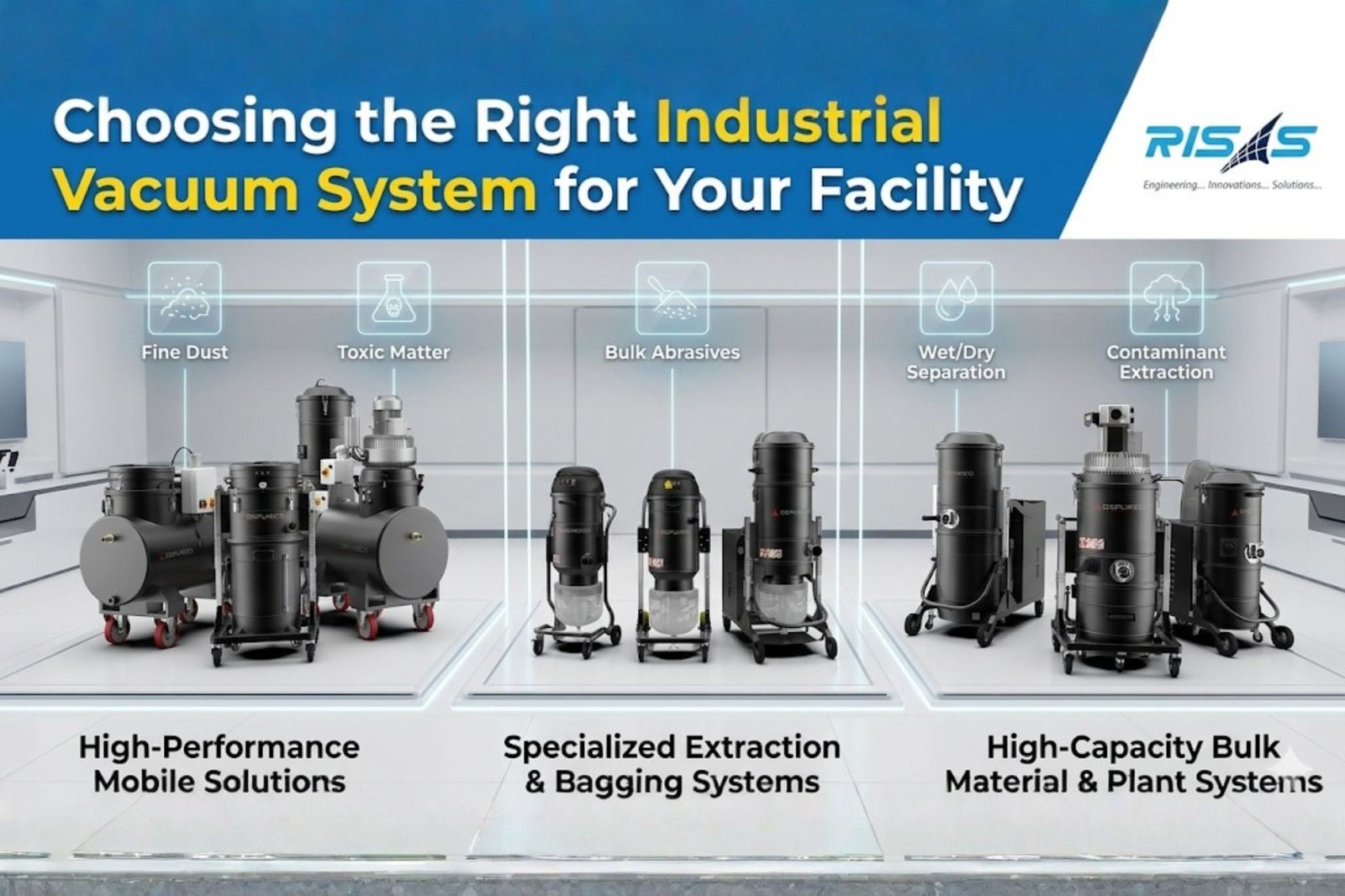
Different industries generate different types of waste materials. Understanding the material type helps determine the correct vacuum system.
Common materials include:
- Fine dust and powders
- Metal chips from CNC machines
- Liquids and sludge
- Hazardous or combustible dust
- Hot materials from industrial processes
Industrial vacuum systems are designed to handle these materials safely while maintaining consistent suction performance.
2. Suction Unit Performance
The suction unit is the core component of an industrial vacuum system.
Common suction technologies include:
Single-Phase Motors
Suitable for intermittent cleaning tasks and smaller industrial operations.
Side Channel Blowers
Designed for continuous 24/7 industrial operation, offering high reliability and minimal maintenance.
Battery Powered Systems
Ideal for facilities where mobility is required and access to electrical outlets is limited.
Choosing the right suction unit ensures efficient operation based on workload and facility size.
3. Filtration System Efficiency
Filtration plays a critical role in protecting workers and maintaining clean air in industrial environments.
Industrial vacuum systems offer multiple filtration options such as:
- M-Class filters for fine industrial dust
- HEPA filters for capturing ultra-fine particles
- PTFE filters for sticky materials
- Nomex filters for high-temperature dust extraction
Advanced filtration ensures maximum dust containment and prevents particles from re-entering the environment.
4. Filter Cleaning Technology
Over time, filters accumulate dust and require cleaning to maintain suction efficiency.
Modern industrial vacuum systems provide several cleaning mechanisms:
- Manual filter shaking
- JetClean automatic filter cleaning systems
- Pneumatic filter cleaning
Automatic cleaning systems improve vacuum performance and extend filter life.
5. Collection Capacity
The size of the collection container determines how much material the vacuum system can handle before emptying.
Common collection options include:
- Drop-down steel bins for easy disposal
- Endless bag systems for hazardous dust handling
Larger containers reduce downtime caused by frequent waste disposal.
6. Safety Requirements and Hazardous Zones
Some industrial facilities operate in hazardous environments where combustible dust or explosive gases may be present.
In such cases, ATEX-certified industrial vacuum systems are required. These systems include:
- Antistatic filters and accessories
- Grounded components
- Explosion-safe suction units
These safety features ensure safe operation in high-risk industrial zones.
Types of Industrial Vacuum Systems
Industrial facilities can choose from different vacuum system configurations based on operational needs.
Portable Industrial Vacuum Systems
Mobile vacuum units are ideal for cleaning specific machines, production lines, or localized areas within a facility.
Centralized Vacuum Systems
Central vacuum systems connect multiple suction points across large facilities, allowing centralized waste collection and improved cleaning efficiency.
These systems are particularly useful for large manufacturing plants with continuous cleaning requirements.
Common Industrial Applications
Industrial vacuum systems are used across a wide range of industries, including:
- Manufacturing and machining operations
- Cement and construction industries
- Oil and gas processing facilities
- Pharmaceutical and chemical plants
- Food processing industries
- Metal fabrication and welding facilities
They are capable of handling fine powders, liquids, metal chips, and industrial debris generated during production processes.
Benefits of Choosing the Right Industrial Vacuum System
Selecting the right vacuum system provides several operational benefits:
- Improved plant hygiene and cleanliness
- Enhanced worker safety
- Reduced equipment maintenance costs
- Efficient waste and dust management
- Increased operational productivity
- Compliance with safety regulations
These advantages make industrial vacuum systems an essential component of modern industrial facilities.
An industrial vacuum system is used to collect dust, debris, liquids, and hazardous materials from industrial environments. These systems help maintain clean workspaces, improve worker safety, and prevent equipment damage caused by accumulated dust and waste.
Choosing the right industrial vacuum system depends on several factors such as the type of material being collected, suction power requirements, filtration efficiency, container capacity, and whether the facility operates in hazardous environments requiring ATEX-certified equipment.
Industrial vacuum systems are widely used in industries such as manufacturing, oil and gas, cement production, metal processing, pharmaceuticals, chemical plants, and food processing facilities where dust, powders, and industrial waste are generated.
Industrial vacuum systems are designed for heavy-duty applications and can handle large volumes of dust, liquids, and debris. They feature stronger suction power, advanced filtration systems, and durable construction compared to standard vacuum cleaners used for household cleaning.
Conclusion
Choosing the right industrial vacuum system for your facility is critical for maintaining a clean, safe, and efficient working environment. By considering factors such as material type, suction performance, filtration efficiency, and safety requirements, industries can select a vacuum system that meets their operational needs.
With advanced suction technology, durable construction, and efficient filtration systems, industrial vacuum systems provide reliable cleaning solutions for demanding industrial applications.
Investing in the right system helps improve productivity, reduce maintenance costs, and ensure long-term operational efficiency.