Introduction
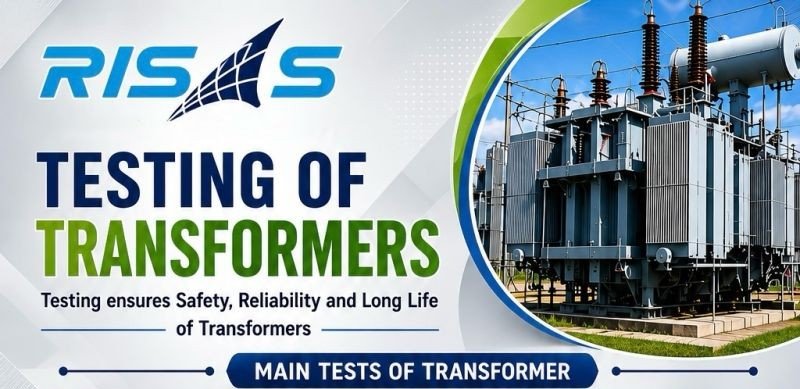
Transformers are among the most critical components in electrical power systems. They play a vital role in the transmission and distribution of electricity across industrial facilities, commercial buildings, utility networks, manufacturing plants, and infrastructure projects.
Because transformers operate continuously under electrical and thermal stress, even a minor defect can eventually lead to equipment failure, unplanned downtime, production losses, equipment damage, and serious safety risks.
Transformer testing is therefore an essential part of electrical asset management and preventive maintenance. Testing helps identify developing faults, verify electrical and mechanical performance, assess insulation and oil condition, and confirm that a transformer can operate safely and reliably under its intended conditions.
At RISAS, we provide professional transformer testing, inspection, and maintenance services designed to improve equipment reliability, enhance electrical safety, reduce unexpected failures, and extend transformer service life.
Why Is Transformer Testing Important?
Regular transformer testing provides valuable information about the condition and performance of electrical transformers. A well-planned testing program can help organizations detect problems before they develop into costly failures.
The key benefits of transformer testing include:
- Improving operational and electrical safety
- Detecting developing faults at an early stage
- Reducing unplanned downtime
- Extending transformer service life
- Improving energy efficiency
- Reducing maintenance and repair costs
- Verifying transformer performance
- Supporting preventive and predictive maintenance
- Helping meet applicable industry and manufacturer requirements
- Improving overall power system reliability
Transformer testing can identify issues such as insulation deterioration, winding problems, abnormal losses, overheating, moisture, oil contamination, and incorrect winding ratios.
The exact tests required depend on the transformer type, rating, application, age, manufacturer recommendations, and maintenance strategy.
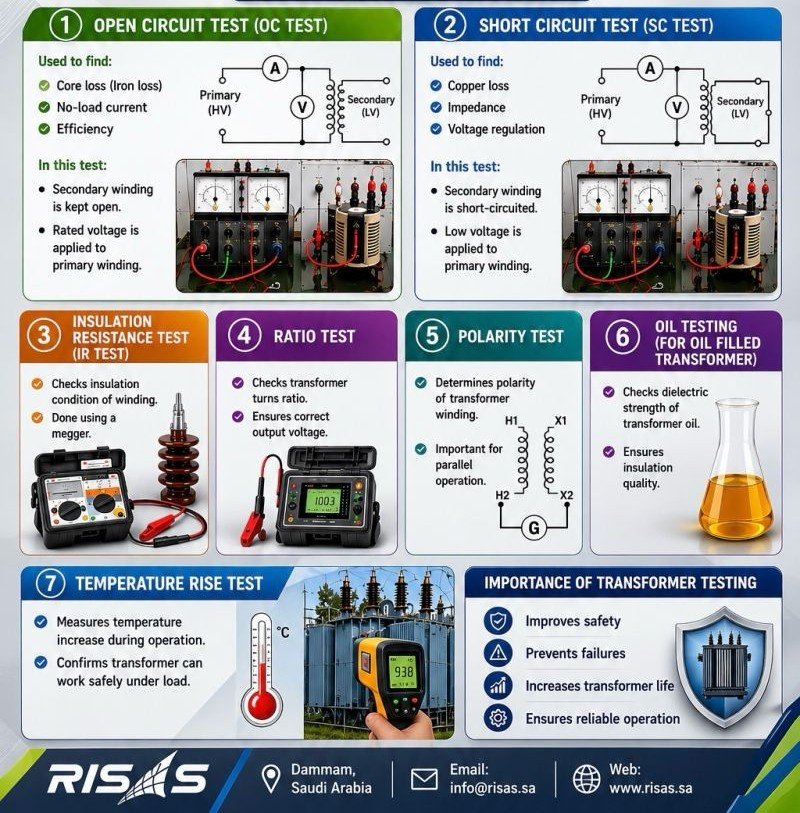
7 Important Transformer Tests
1. Open Circuit Test (OC Test)
The Open Circuit Test, also known as the No-Load Test, is primarily used to determine the transformer’s core or iron losses and no-load current.
Purpose of the Open Circuit Test
The test is performed to:
- Measure core or iron losses
- Determine no-load current
- Evaluate transformer magnetic performance
- Obtain parameters used in transformer efficiency calculations
Open Circuit Test Procedure
During the test, one winding is left open while a specified voltage is applied to the other winding. Voltage, current, and input power are measured using appropriate test instruments.
Because the secondary winding is open, the current is relatively small and the measured input power primarily represents the transformer’s core losses.
Why Is the Open Circuit Test Important?
The results provide useful information about the condition and performance of the transformer core and magnetic circuit. Abnormally high losses may indicate core-related problems, manufacturing defects, or other abnormalities requiring further investigation.
2. Short Circuit Test (SC Test)
The Short Circuit Test is used to determine transformer copper losses, impedance, and other parameters associated with loaded operation.
Purpose of the Short Circuit Test
The test helps to:
- Determine copper losses
- Calculate transformer impedance
- Evaluate winding characteristics
- Support voltage regulation calculations
- Assist in determining transformer efficiency
Short Circuit Test Procedure
One transformer winding is short-circuited while a controlled, reduced voltage is applied to the other winding. The applied voltage is increased until the specified current flows through the windings.
The measured voltage, current, and power provide important information about the transformer’s load-related characteristics.
Why Is the Short Circuit Test Important?
The Short Circuit Test provides valuable information about winding performance and transformer impedance. The results are commonly used when evaluating transformer efficiency, voltage regulation, and performance under load.
3. Insulation Resistance Test (IR Test)
The Insulation Resistance Test, commonly called the IR Test, is one of the most important electrical tests used to assess transformer insulation condition.
Purpose of the Insulation Resistance Test
The test is used to:
- Evaluate insulation condition
- Identify moisture contamination
- Detect insulation deterioration
- Establish insulation resistance trends
- Support preventive maintenance decisions
Insulation Resistance Test Procedure
A calibrated insulation resistance tester, commonly known as a Megger, applies a specified DC test voltage between selected transformer windings and ground, or between windings as required by the test procedure.
The measured insulation resistance is recorded and compared with applicable requirements, previous test results, and manufacturer recommendations.
Why Is the IR Test Important?
Transformer insulation naturally deteriorates over time due to heat, moisture, contamination, electrical stress, and aging.
Low or significantly declining insulation resistance can indicate a developing insulation problem. Regular IR testing and trend analysis can help identify potential issues before they result in insulation breakdown, flashover, or transformer failure.
Important: Insulation resistance results should not be evaluated using a single universal pass/fail value. Temperature, transformer design, test voltage, previous readings, and manufacturer or applicable standards should be considered.
4. Transformer Turns Ratio Test (TTR Test)
The Transformer Turns Ratio Test, commonly known as the TTR Test, verifies the ratio between the primary and secondary windings.
Purpose of the TTR Test
The test helps to:
- Verify the transformer turns ratio
- Confirm the correct voltage transformation ratio
- Check tap-changer positions
- Identify possible winding abnormalities
- Detect incorrect winding connections or configurations
TTR Test Procedure
A specialized transformer turns ratio tester applies a controlled test signal and measures the resulting voltage ratio between the transformer windings.
The measured ratio is then compared with the transformer’s nameplate data and applicable tolerance requirements.
Why Is the TTR Test Important?
An incorrect turns ratio can result in abnormal output voltage, poor system performance, circulating currents, and other operational problems.
TTR testing is particularly useful during transformer commissioning, maintenance, troubleshooting, and after repairs or winding work.
5. Transformer Polarity Test
A Transformer Polarity Test determines the relative direction of induced voltages in the transformer windings.
Purpose of Polarity Testing
The test helps to:
- Verify winding polarity
- Confirm correct phase relationships
- Support correct transformer connections
- Assist with parallel operation of transformers
- Prevent incorrect electrical connections
Polarity Test Procedure
The test determines whether the transformer winding arrangement has the required polarity, such as additive or subtractive polarity, depending on the transformer design and application.
Why Is Transformer Polarity Important?
Correct polarity is particularly important when transformers are connected in parallel or integrated into larger electrical systems.
Incorrect polarity or phase relationships can result in circulating currents, excessive current flow, equipment stress, and potentially severe transformer damage.
6. Transformer Oil Testing
Oil-filled transformers use insulating oil for two critical functions: electrical insulation and heat transfer.
Over time, transformer oil can deteriorate due to moisture, contamination, oxidation, thermal stress, and electrical faults. Regular transformer oil testing helps determine the condition of both the oil and, in some cases, the transformer itself.
Purpose of Transformer Oil Testing
Oil testing can help:
- Assess dielectric strength
- Detect moisture and contamination
- Evaluate oil degradation
- Identify signs of overheating or internal faults
- Monitor transformer condition
- Support predictive maintenance
Common Transformer Oil Tests
Depending on the application and maintenance requirements, common tests include:
- Breakdown Voltage (BDV) Test
- Moisture Content Analysis
- Acidity / Neutralization Number Test
- Dissolved Gas Analysis (DGA)
- Oil quality and condition assessments
Why Is Transformer Oil Testing Important?
Degraded or contaminated transformer oil can reduce insulation performance and cooling effectiveness. Certain tests, particularly Dissolved Gas Analysis (DGA), can also provide important diagnostic information about possible internal electrical or thermal faults.
Regular oil analysis can help identify developing problems before they result in major transformer failure.
7. Temperature Rise Test
The Temperature Rise Test evaluates the thermal performance of a transformer under specified operating conditions.
Purpose of the Temperature Rise Test
The test helps to:
- Determine temperature rise in transformer windings and oil
- Evaluate cooling system performance
- Verify thermal performance
- Confirm compliance with specified temperature limits
- Assess the transformer’s ability to operate at its rated load
Temperature Rise Test Procedure
The transformer is operated under specified test conditions while temperatures of relevant components, including windings and insulating oil, are monitored.
The measured temperature rise is evaluated against the applicable design requirements and manufacturer specifications.
Why Is Temperature Rise Testing Important?
Excessive operating temperatures can accelerate insulation aging and reduce transformer service life.
A properly performed temperature rise test helps verify that the transformer can safely dissipate heat and operate within its specified thermal limits.
Transformer Testing During Different Stages of the Equipment Lifecycle
Transformer testing should not be viewed as a one-time activity. Different tests may be required at different stages of the transformer’s lifecycle.
During Manufacturing
Factory testing helps verify that the transformer has been manufactured according to its design and specified performance requirements.
During Installation and Commissioning
Pre-commissioning tests help establish the transformer’s initial condition and verify that it is ready to be connected to the electrical system.
During Routine Maintenance
Periodic testing helps identify changes in electrical, insulation, thermal, and oil condition over time.
After Repairs or Major Maintenance
Testing after winding repairs, bushing replacement, oil-related work, tap-changer maintenance, or other major interventions helps verify equipment condition before returning the transformer to service.
During Troubleshooting
Diagnostic testing can help identify the source of abnormal temperature, noise, insulation problems, winding issues, oil abnormalities, or other transformer performance concerns.
Best Practices for Transformer Maintenance
A comprehensive transformer maintenance program should combine inspection, testing, monitoring, and accurate record keeping.
Recommended practices include:
- Conduct routine visual and physical inspections
- Perform periodic electrical testing
- Monitor insulation resistance trends
- Carry out transformer oil analysis where applicable
- Inspect cooling systems and associated equipment
- Check bushings and connections
- Monitor abnormal noise, vibration, temperature, or leakage
- Maintain accurate transformer test records
- Compare current results with historical data
- Follow manufacturer recommendations
- Use appropriately calibrated testing equipment
- Investigate significant changes in test results promptly
Why Trend Analysis Matters
A single test result provides useful information, but trending results over time can provide even greater insight into transformer health.
Comparing current measurements with previous test results can help identify gradual deterioration and support condition-based maintenance decisions.
When Should a Transformer Be Tested?
The required testing frequency depends on factors such as:
- Transformer type and rating
- Operating environment
- Criticality of the electrical load
- Age and condition of the transformer
- Manufacturer recommendations
- Previous test results
- Maintenance history
- Applicable standards and site requirements
Testing may be particularly important during commissioning, scheduled maintenance, after major repairs, following abnormal operating events, and when condition-monitoring data indicates a potential problem.
A qualified electrical testing professional can help determine an appropriate testing and maintenance program for a specific transformer installation.
Why Choose Professional Transformer Testing Services?
Transformer testing involves high-voltage electrical equipment and requires appropriate test instruments, procedures, safety controls, and technical expertise.
Professional testing services can provide:
- Proper test planning and procedures
- Qualified testing personnel
- Calibrated test equipment
- Accurate measurement and documentation
- Technical interpretation of test results
- Comparison with previous test data
- Identification of potential abnormalities
- Recommendations for further inspection or maintenance
Professional testing is not simply about collecting measurements. Correct interpretation of test results is essential for making reliable maintenance and asset-management decisions.
Conclusion
Transformer testing is a critical part of electrical power system reliability, preventive maintenance, and asset management.
Tests such as the Open Circuit Test, Short Circuit Test, Insulation Resistance Test, Transformer Turns Ratio Test, Polarity Test, Transformer Oil Testing, and Temperature Rise Test provide valuable information about transformer electrical, insulation, thermal, and operational condition.
Regular and properly planned testing can help organizations:
- Detect developing problems early
- Reduce unexpected transformer failures
- Improve electrical safety
- Minimize unplanned downtime
- Extend transformer service life
- Optimize maintenance costs
- Improve overall power system reliability
Investing in professional transformer testing can help identify potential problems before they become expensive failures.
If you require transformer testing, inspection, maintenance, or electrical reliability services, RISAS can help you develop a testing approach suited to your equipment and operating requirements.
About RISAS
RISAS specializes in industrial and electrical solutions, including transformer testing, inspection, maintenance, and reliability services.
Our team focuses on helping organizations maintain safe, reliable, and efficient electrical assets through professional testing and condition assessment.
For transformer testing requirements, contact RISAS to discuss your equipment, application, and testing needs.
Frequently Asked Questions About Transformer Testing
What is transformer testing?
Transformer testing is the process of evaluating a transformer’s electrical, insulation, thermal, and operational condition using specialized tests and instruments. Testing helps identify defects, verify performance, and support preventive maintenance.
What are the main types of transformer tests?
Common transformer tests include the Open Circuit Test, Short Circuit Test, Insulation Resistance Test, Turns Ratio Test, Polarity Test, transformer oil testing, and temperature rise testing. Additional tests may be required depending on the transformer type and application.
How often should a transformer be tested?
There is no single testing interval that applies to every transformer. Testing frequency depends on the equipment type, operating conditions, criticality, age, maintenance history, manufacturer recommendations, and applicable standards.
Why is insulation resistance testing important for transformers?
Insulation resistance testing helps assess the condition of transformer insulation and can indicate moisture, contamination, or insulation deterioration. Trending results over time can help identify developing problems.
What is transformer oil testing?
Transformer oil testing evaluates the condition of insulating oil used in oil-filled transformers. Common assessments include breakdown voltage, moisture, acidity, and dissolved gas analysis.
What does a transformer turns ratio test determine?
A transformer turns ratio test verifies the relationship between the primary and secondary winding voltages. It can help identify incorrect ratios, winding problems, tap-changer issues, or other abnormalities.
Can transformer testing prevent failures?
Testing cannot guarantee that a transformer will never fail, but regular condition assessment can identify many developing problems early. This allows maintenance teams to investigate issues and take corrective action before a major failure occurs.
📍 Dammam, Saudi Arabia
📧 info@risas.sa
🌐 www.risas.sa