
Electrostatic Precipitator (ESP): A Complete Guide for Industrial Dust Control
Industrial facilities generate large volumes of dust, smoke, and fine particulate matter during manufacturing processes. To control these emissions and comply with environmental regulations, industries use advanced air pollution control systems like the Electrostatic Precipitator (ESP).
Electrostatic precipitators are among the most efficient technologies for removing dust particles from industrial exhaust gases. With efficiencies reaching up to 99%, ESP systems are widely used in power plants, cement factories, steel plants, and oil refineries.
This article explains the working principle, components, advantages, and applications of electrostatic precipitators.
⸻
What is an Electrostatic Precipitator?
An Electrostatic Precipitator (ESP) is an air pollution control device that removes fine dust and particulate matter from exhaust gas streams using electrical forces.
The system uses high-voltage electrostatic fields to charge dust particles and attract them to collecting plates, separating them from the gas stream before it is released into the atmosphere.
⸻
Working Principle of Electrostatic Precipitator
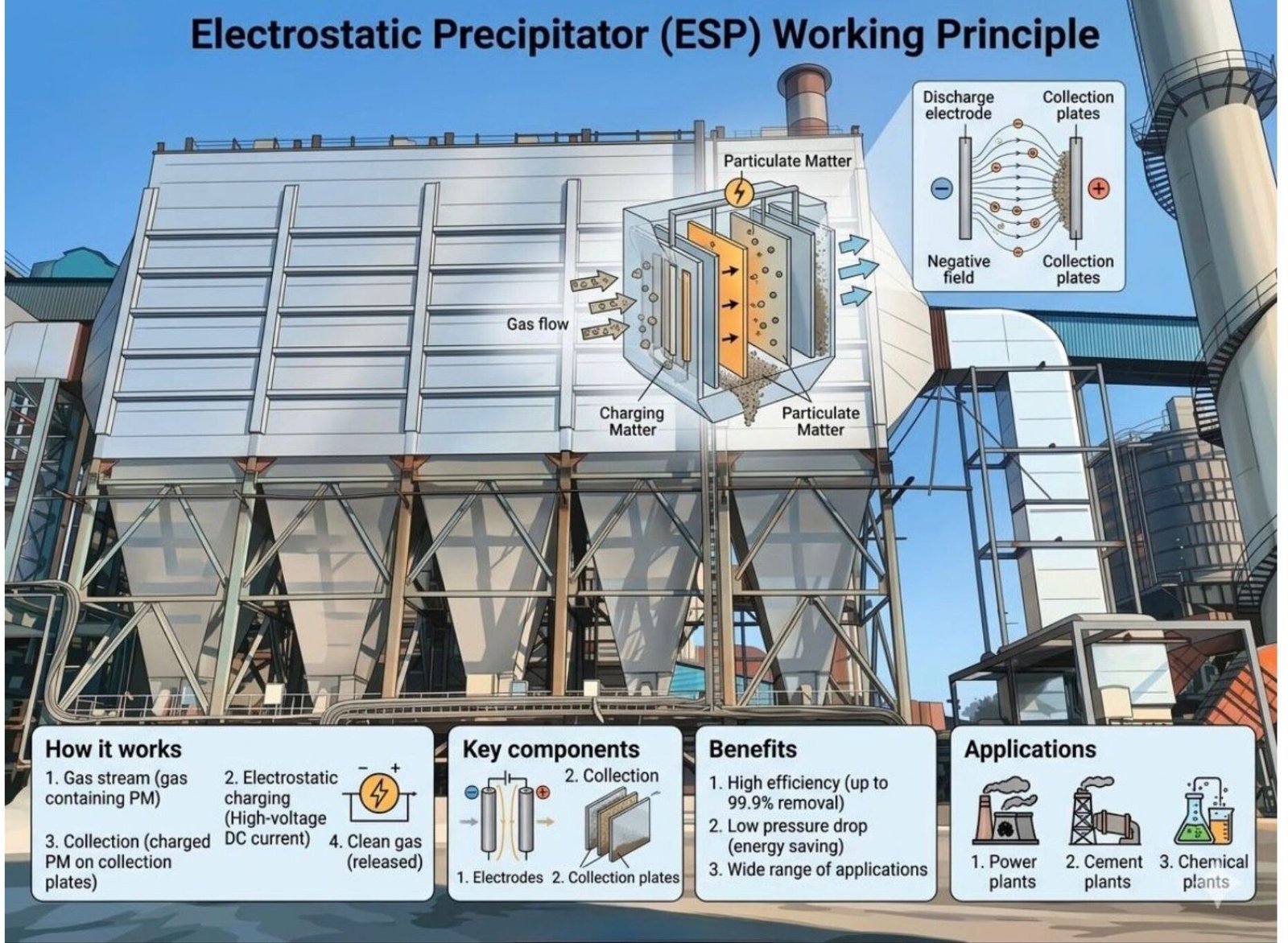
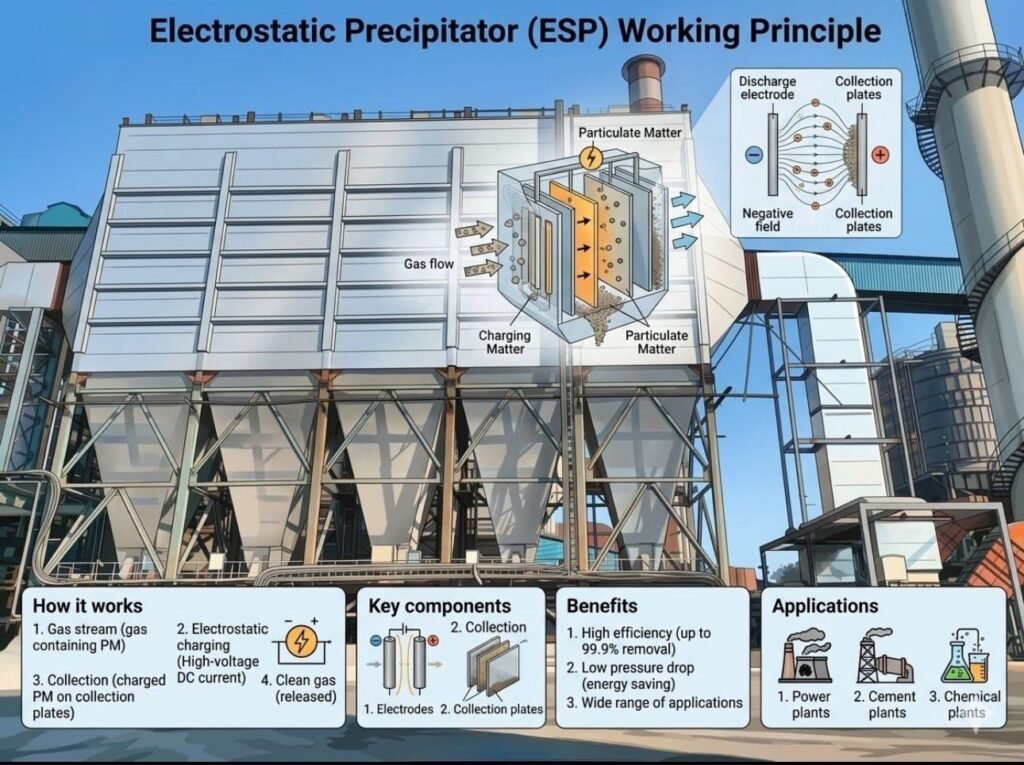
The working principle of an ESP is based on electrostatic attraction between charged particles and collecting plates.
Step 1: Gas Entry
Dust-laden gas enters the electrostatic precipitator through the inlet duct.
Step 2: Ionization (Corona Discharge)
Inside the ESP chamber, high-voltage discharge electrodes create a corona discharge, producing negatively charged ions.
Step 3: Particle Charging
These ions collide with dust particles in the gas stream, giving them a negative electrical charge.
Step 4: Particle Collection
The negatively charged particles are attracted toward positively charged collecting plates, where they stick and form a dust layer.
Step 5: Dust Removal
A mechanical rapping system periodically vibrates the plates, causing the accumulated dust to fall into collection hoppers.
Step 6: Clean Gas Outlet
After dust removal, clean gas exits through the outlet stack, significantly reducing air pollution.
⸻
Main Components of an Electrostatic Precipitator
A typical ESP system consists of several key components:
• Discharge electrodes (ionizing wires)
• Collecting plates
• High voltage transformer-rectifier unit
• Rapping system for dust removal
• Dust collection hoppers
• Gas inlet and outlet ducts
• Control panel and monitoring system
Each component plays a crucial role in ensuring efficient dust separation and emission control.
⸻
Advantages of Electrostatic Precipitators
Electrostatic precipitators offer many benefits for industrial emission control:
High Dust Collection Efficiency
ESP systems can remove up to 99% of fine particles, including PM2.5.
Handles Large Gas Volumes
They are capable of processing very large volumes of exhaust gases.
Low Pressure Drop
Compared to bag filters, ESP systems operate with low pressure loss, saving energy.
Suitable for High Temperatures
Electrostatic precipitators can operate in high-temperature industrial environments.
Low Operating Cost
After installation, ESP systems generally have low maintenance and operating costs.
⸻
Industrial Applications of Electrostatic Precipitators
Electrostatic precipitators are widely used in various industries, including:
Power Plants
Coal-fired power plants use ESPs to remove fly ash from flue gas emissions.
Cement Industry
Cement plants use ESP systems to capture kiln dust and reduce environmental pollution.
Steel Manufacturing
Steel plants rely on ESP technology to control emissions from furnaces and sintering processes.
Oil & Gas Industry
Refineries and petrochemical plants use ESPs for mist and particulate removal.
Chemical Processing Plants
Many chemical industries use electrostatic precipitators to maintain clean air and regulatory compliance.
⸻
Why Industries Choose Electrostatic Precipitators
Environmental regulations around the world are becoming stricter. Industries must adopt reliable emission control systems to reduce pollution and ensure compliance.
Electrostatic precipitators provide:
• High efficiency dust removal
• Long service life
• Reliable operation in harsh industrial environments
• Compliance with environmental standards
⸻
Electrostatic Precipitator Solutions from RISAS.
At RISAS, Saudi Arabia, we supply advanced industrial air pollution control solutions designed for demanding industrial environments.
Our solutions support industries with:
• High-efficiency dust collection systems
• Industrial vacuum systems
• Air pollution control equipment
• Custom engineered solutions for factories and plants
We help businesses maintain clean air, safe working environments, and environmental compliance.
⸻
Conclusion
The Electrostatic Precipitator is one of the most effective technologies for controlling industrial emissions. With high efficiency and reliable performance, ESP systems are essential for modern industries seeking sustainable and environmentally responsible operations.
As industries continue to grow, the adoption of advanced air pollution control technologies like electrostatic precipitators will play a critical role in protecting the environment and ensuring cleaner air for future generations.